22.11.07

MARIO DE BIASI


Una città, in quasi sessant’anni, subisce trasformazioni così profonde da renderla spesso irriconoscibile. Quando Mario De Biasi inizia la sua instancabile ‘ricognizione’ la guerra si è da poco conclusa, lasciando terribili ferite nel tessuto urbano, e sociale. Trascorre il tempo e Milano assume volti sempre diversi, e sempre fedeli alla sua realtà più autentica. Nell’intera storia della fotografia è improbabile che una città sia stata seguita per un così lungo periodo, ininterrottamente e da un singolo fotografo.
LINK

MARIO GIACOMELLI


Frank Horvat : I wonder if your eyes are like your mother's.

Mario Giacomelli : I don't really know what my mother's eyes were like. Sometimes I feel there was no difference between us, except that she was dressed as a woman and I as a man. When thinking back, the thing that now seems the most important - and also the most beautiful - is that never, at any time of her life, I found a way of telling her how much I loved her. Maybe because of my bad character, or out of shyness. I never kissed her and probably never even asked how she was. She died a few months ago, and when she was dead I kissed her lips. For me it was...
LINK & LINK

MARIO CATTANEO


In occasione della donazione del fondo fotografico Mario Cattaneo da parte degli eredi, Il Museo di Fotografia Contemporanea presenta una selezione delle sue opere nella sala dedicata alla collezione permanente.

Mario Cattaneo appartiene a quella generazione di fotografi italiani che nella seconda metà del Novecento trovano nell’ambiente dei circoli fotoamatoriali un luogo di espressione e di dibattito sulla fotografia: dall’approfondimento tecnico alla conoscenza dei maestri della fotografia internazionale, alla formulazione di ipotesi teoriche ed estetiche sul mezzo.

LINK

ENRICO PASQUALI


Empecé mirando las películas, la pintura y los libros que hablaban de neorrealismo. Deseaba ser como aquellos artistas que a través de su arte querían no sólo describir la realidad tal como era, sino imponer en ella un cambio. Quería contribuir a modificar las cosas; a pesar de no sentirme un artista, sabía que tenía algo que decir. Corno un pintor o un escritor, fotografiaba a los trabajadores como eran, sin ninguna opción de retoque. Me interesaba el trabajo del hombre y su voluntad de cambio para mejorar su propia condición de vida; mis padres eran esclavos, esclavos de su propia generación, de su propio analfabetismo.
LINK

GIANNI BERENGO GARDIN


Gianni Berengo Gardin è nato a Santa Margherita Ligure nel 1930. Ha iniziato a occuparsi di fotografia nel 1954. Dopo aver vissuto a Roma, Venezia, Lugano e Parigi, nel 1965 si è trasferito definitivamente a Milano iniziando la carriera professionale, dedicandosi alla fotografia di reportage, all’indagine sociale, alla documentazione di architettura, alla descrizione ambientale. Ha collaborato con le principali testate della stampa illustrata italiana ed estera, ma si è principalmente dedicato alla realizzazione di libri, pubblicando oltre 180 volumi fotografici, tra monografie e opere collettive.
Le sue prime foto di reportage sono state pubblicate nel 1954 su Il Mondo, diretto da Mario Pannunzio, con cui ha collaborato fino al 1965.
LINK

21.11.07

WALKER EVANS - SUBWAY


Between 1938 and 1941 Evans surreptitiously shot portraits of strangers in the New York subway, riding trains with a camera concealed under his coat, fitted with a shutter release running inside his sleeve. In 1966, he finally published a book of the pictures, entitled Many Are Called ; in the same year they were exhibited at New York's Museum of Modern Art.
LINK

WALKER EVANS - SUBWAY

WALKER EVANS - SUBWAY

WALKER EVANS - SUBWAY

20.11.07

A WAY OF SEEING

A WAY OF SEEING
James Agee

HELEN LEVITT was born and educated in New York City. She made these photographs in New York in the 194os. None of the photographs is intended as a social or psychological document. Several are records of street and sidewalk drawings; most of the others can best be described as lyrical photographs. In this book they are arranged, numbered but without captions, in an order suggested by the essay. "THE MIND and the spirit are constantly formed by, and as constantly form, the senses; and misuse or neglect the senses only at grave peril to every possibility of wisdom and well-being. The busiest and most abundant of the senses is that of sight. The sense of sight has been served and illuminated by the visual arts for as long, almost, as we have been human. For a little over a hundred years, it has also been served by the camera. Well used, the camera is unique in its power to develop and to delight our ability to see. Ill or indifferently used, it is unique in its power to...
LINK

HELEN LEVITT - A WAY OF SEEING

HELEN LEVITT - A WAY OF SEEING

HELEN LEVITT - A WAY OF SEEING

18.2.07

ALVIN LANGDON COBURN


Alvin Langdon Coburn was born into a middle-class family in Boston in 1882. His first camera was given to him by his uncles when he was eight years old. Thus began his venture into photography as a means of artistic expression In 1899 he moved with his mother to London and soon after had his first exhibition with the Linked Ring Brotherhood in 1900. The Linked Ring was an organization founded in 1892 by a group of photographers that included H.P. Robinson, George Davison, and H. H. H. Cameron, Julia Margaret Cameron's son. The three interlinked rings that were the symbol of the Brotherhood had Masonic overtones and
link

17.2.07

MARTIN MUNKACSI


In 1932 the young Henri Cartier-Bresson, lately returned from Africa, saw a photograph of African children charging into waves on a beach. “I must say that it is that very photograph which was for me the spark that set fire to fireworks,” he recalled years later. “I couldn’t believe such a thing could be caught with the camera. I said, ‘Damn it,’ took my camera and went out into the street.” What Cartier-Bresson produced during the next few years, as the curator Peter Galassi once wrote, became “one of the great, concentrated episodes in modern art.”

How much the African photograph actually shaped this work is debatable, but it struck a chord. It epitomized the combination of serendipity and joie de vivre that Cartier-Bresson admired: three naked boys, their silhouettes against white spray and sun-drenched water, making a perfect geometry.

The man who shot the picture was Martin Munkacsi. Hungarian-born, a star of Berliner Illustrierte Zeitung, the leading illustrated German newsmagazine, Munkacsi was then one of the most celebrated photojournalists. He reached a pinnacle of fame and fortune in New York later that decade, claiming to be the highest-paid photographer in the world (he was notoriously self-mythologizing), revolutionizing the American fashion magazine under Carmel Snow and Alexey Brodovitch at Harper’s Bazaar.

LINK

6.12.06

BORIS IGNATOVICH


Boris Ignatovich is one of the outstanding photographers of the Russian avant-garde - the pioneers of photo journalism. He belonged to the Rodchenko and Lissitzky circle of artists and was closely affiliated and befriended with professional photographers like Alpert and Shaikhet, Skurichin and Shagin, Langman and Sterzer, Fridljand and Tules, Markov and Chalip, Petrusov and Kovrigin as well as Gruntal and Chlebnikov, the masters of subject- and document related photography.

For the avant-garde artist amongst the photographers of the 1920's there had been three different ways of ...
LINK

28.11.06

ARNOLD NEWMAN


PROPUESTA DE MODELO DE ANÁLISIS DE LA IMAGEN FOTOGRÁFICA

Descripción proyecto:

Nuestra propuesta se formula para el análisis del campo de la fotografía artística, ya que es el tipo de imágenes que da el juego suficiente para poder desarrollar un estudio analítico en profundidad. Creemos que en el contexto actual es más necesario que nunca ofrecer un trayecto metodológico en el estudio de la imagen, y más concretamente en el caso de la fotografía, que contribuya a responder la pregunta “cómo significa la fotografía”.

En el análisis de una fotografía se puede distinguir una serie de distintos niveles, desde la estricta materialidad de la obra, y su relación con el contexto histórico-cultural, hasta un nivel interpretativo.

La presente propuesta de análisis de la imagen fotográfica se completa con la preparación de una base de datos de fotografías, que incluye unos 900 registros, cada uno con una breve ficha técnica, y una selección de 30 fotografías analizadas siguiendo la metodología de trabajo que hemos expuesto. El trabajo de investigación, realizado entre los años 2001-2004, está financiado por la Convocatoria de Proyectos de Investigación BANCAJA-UJI de la Universidad Jaume I, código I201-2001, dirigido por el Dr. Rafael López Lita, Catedrático de Comunicación Audiovisual y Publicidad, la coordinación del Dr. Javier Marzal Felici, Profesor Titular de Comunicación Audiovisual y Publicidad, y el Grupo de Investigación “ITACA-UJI” (Investigación en Tecnologías Aplicadas a la Comunicación Audiovisual). Todo el material puede ser consultado en la página web www.analisisfotografia.uji.es, y ha sido presentado en el I Congreso de Teoría y Técnica de los Medios Audiovisuales, dedicado en esta edición a “El análisis de la imagen fotográfica”, celebrado en Castellón los días 13, 14 y 15 de octubre de 2004.
LINK

23.11.06

EDWARD STEICHEN


Edward Steichen (March 27, 1879–March 25, 1973) was an American photographer, painter, and art gallery and museum curator, born in Bivange, Luxembourg. His family moved to the United States in 1881 and he became a naturalized citizen in 1900.

Having established himself as a fine-art painter, in the beginning of the 20th century, Steichen assumed the pictorialist approach in photography and...
LINK

LEWIS HINE


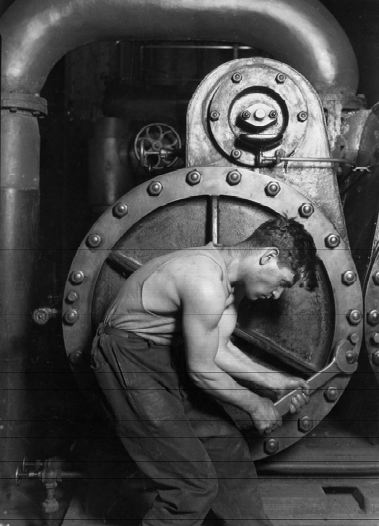
Lewis Wickes Hine (September 16, 1874 - November 3, 1940), was an American photographer. For Hine, the camera was both a research tool and an instrument of social reform.

Born in Oshkosh, Wisconsin, Hine studied sociology at the University of Chicago, Columbia University and New York University. He began his career in 1904, photographing immigrants arriving in the United States at Ellis Island in New York Harbor. In 1908, he became...
LINK

22.11.06

WALKER EVANS


Walker Evans (November 3, 1903 – April 10, 1975) was an American photographer best known for his work for the Farm Security Administration documenting the effects of the Great Depression. Much of Evans' work from the FSA period uses the large-format 8x10in view camera, which when used directly in front of a subject can create the appearance of a dispassionate viewpoint. Evans and other FSA photographers used this technique, and others, to emphasize the plight of America's poor and ...
LINK